



You spot them in cars occasionally: a “Baby On Board” sign, like a warning to other drivers the car is carrying precious cargo, so be careful! Driving your precious children around safely is a parent’s top priority. Children in cars need to be safely strapped into a car seat, even on short trips as that’s when the majority of accidents tend to happen.
Each year thousands of young children are injured or killed in car crashes. Proper use of car safety seats helps keep children safe. But with so many different car safety seats available, it’s no wonder many parents find it hard to decide on a car seat that suits their needs. There are many types of car seats to choose from, depending on the age and weight of your child, if it converts and the positioning of the seat in the vehicle. Maxi-Cosi helps you choose.
TYPES OF CAR SEATS
The quick guide below is a good place to start your search. However, it’s important to find out about the safety and convenience features and how to use your car seat.
| Age Type of car seat What the law says Important |
Baby birth-12 months birth-13 kg |
Rearfacing baby seats and convertible seats in rearfacing position |
Child car seat is compulsory |
All babies should always travel rearfacing until they are at least 1 year of age and weigh at least 9 kg (20 lbs)
|
Toddler 9 months to 3½ years | 9 18 kg |
Forward facing, rear-facing or convertible seats
|
Child car seat is compulsory |
It is best to travel rearfacing as long as possible. Children 1 year of age and at least 9 kg (20 lbs) can ride forward facing. |
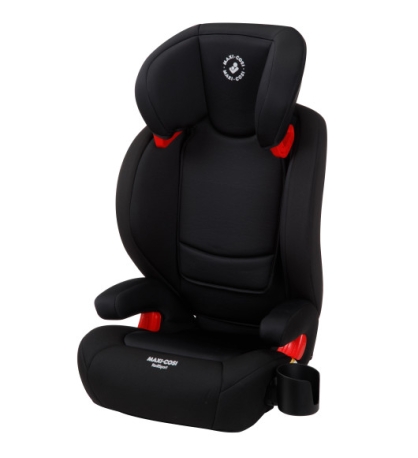
School-aged child 3½ - 12 years 15-36 kg |
Child (booster) seats – always with backrest!
|
Child car seat is compulsory until children are either 135 cm (4’4”) in height or the age of 12, whichever they reach first. |
Child (booster) seats must have a back support with belt positioning guides. Backless boosters do not offer enough protection.
|
| Older child |
No car seat; use car seat belt
|
Car seat belt is compulsory
|
Children over 12 years or over 135 cm in height should use a 3-point car seat belt. |
BABIES: ALWAYS REARFACING
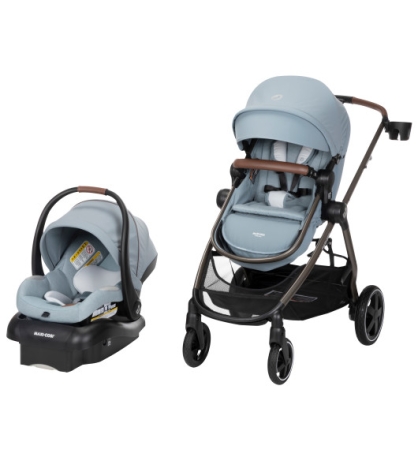
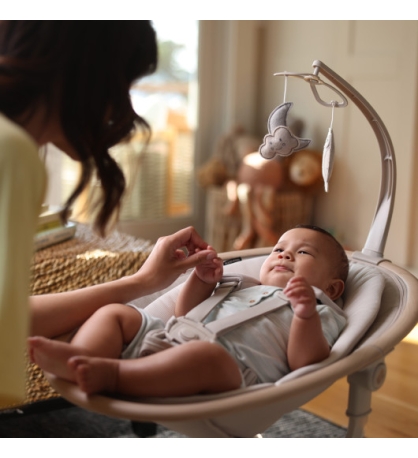
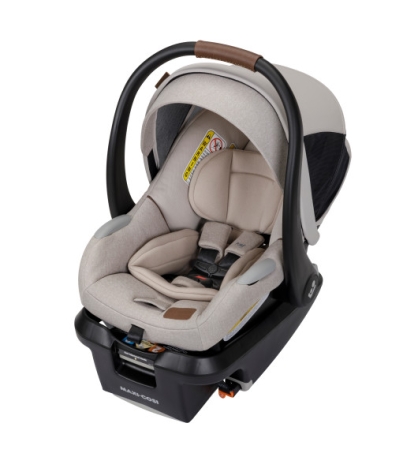
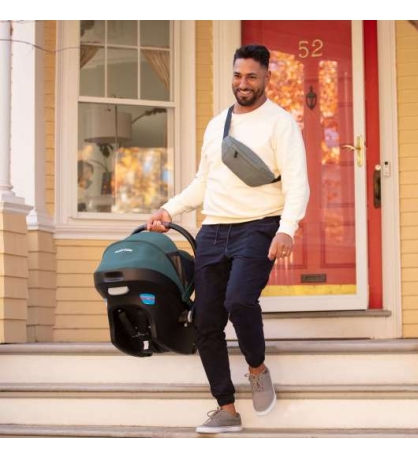
Baby car seats can be rearfacing, infant-only or convertible ‘two-way’ seats for infant and toddler age. Infant-only seats are small and have carrying handles
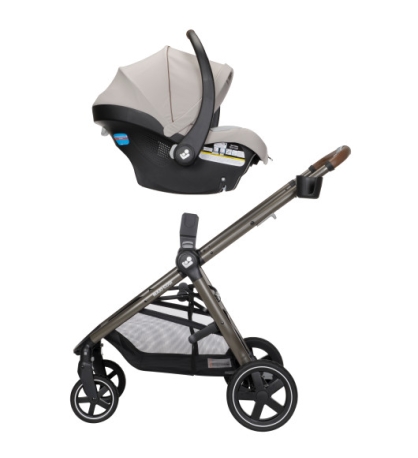
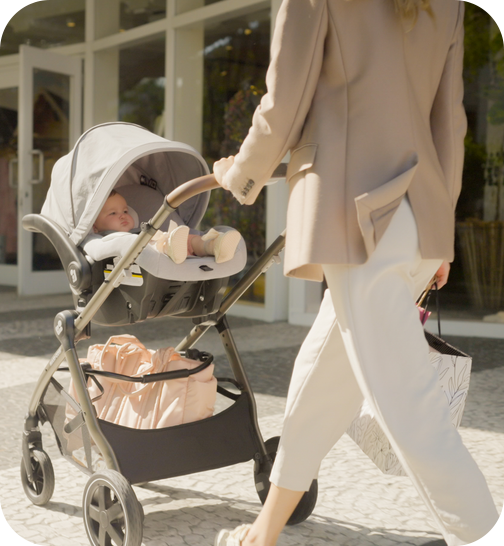
and can be part of a travel system with a stroller. They are used for travel and as a seat at home. Some have an optional base that can be left in the car.
The baby seat clicks into and out of the (Isofix or belt-based) base, so you don’t have to install the base each time you use it. The baby seat is always used
in a rearward facing position in the car. Remember to switch off any airbags where you fit the baby seat.
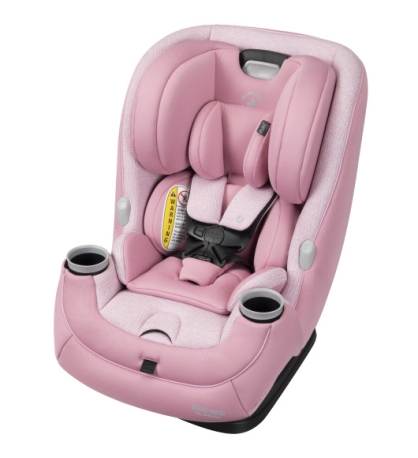
Convertible seats are also known as two-way seats or multi-group seats as they cover two different age groups. You start off using it in a rearfacing position
for your newborn, then ‘convert’ it to forward-facing for your toddler. This means the seat can be used longer by your child. They are bulkier than infant seats
and do not come with carrying handles or a separate base. As convertible seats have higher rearfacing weight and height limits than infant-only seats, they are
ideal for bigger babies.
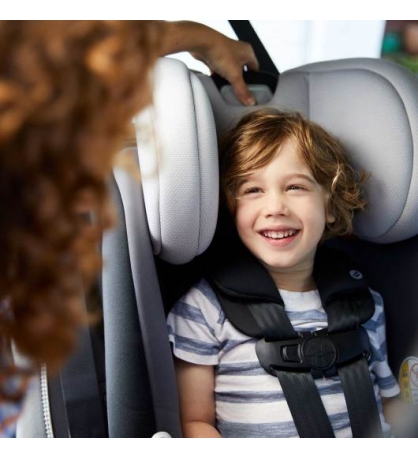
Harness in baby seats
A 3-point harness secures your baby in an infant-only car seat. As a convertible seat also needs to restrain a bigger and heavier toddler, this type of seat
usually features a 5-point harness that attaches at the shoulders, hips and between the legs. Car seats in the US and Canada can also have a padded
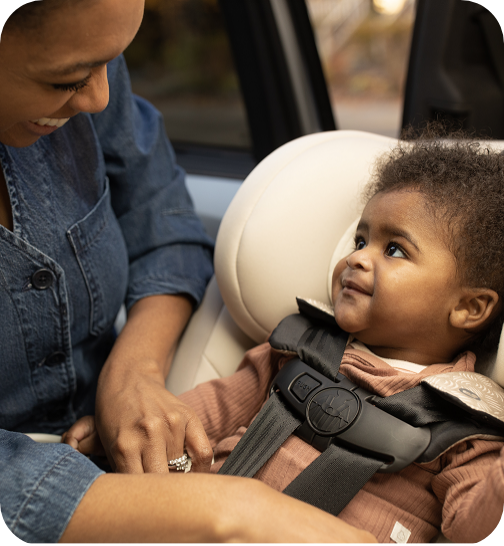
tray-like shield that swings down over the child instead of a harness. Harnesses are live savers, here are tips to use them properly.
TODDLERS: CHOOSE YOUR SEAT DIRECTION
It is strongly recommended to let your child travel rearward facing as long as possible. When your child has finally outgrown the baby seat, there are
several options for toddler seats:
Convertible seats – two-way, multi-group car seats, normally used from birth to 18 kg, that you switch from a rearfacing (baby) to forward-facing
position (toddler).
Forward-facing seats – car seats specifically designed for children from 9 to 18 kg, facing the front.
Rearfacing seats – car seats specifically designed for the age bracket of 9 months to 3½ years (9 to 18 kg) facing the rear throughout.
Combination seats – multigroup car seats covering two older age groups, toddler and school age and always used forward facing. As a toddler car seat,
it uses a harness for children up to about 18 kg, then both child and seat are secured with the regular car seat belt.
SECURE FITTING WITH ISOFIX
ISOFIX is the international standard to fit child car seats in cars.
It provides the safest, easiest and quickest way to install a child seat correctly, without the need of car seat belts. From 2006, all new cars are equipped with Isofix and a top tether anchorage point. Isofix is also fitted in a large number of car brands built prior to 2006. The system is also known as LATCH (Lower Anchors and Tethers for Children) in the United States and LUAS (Lower Universal Anchorage System) or CANFIX in Canada. The European Isofix fitting mechanism is different to LATCH: two retractable connectors connect the seat to the Lower Anchors, whereas in the US, an open clip style connector is used. Installing an Isofix car seat using the Isofix fitting points in your car creates a rigid connection between the car seat and the car chassis. Isofix toddler seats and baby seats fitted on base units have a support leg which prevents forward rotation. An Isofix car seat needs to be installed once, after which you can leave the car seat or base in the car, ready for use on every trip. You will also find a range of Isofix car seats specially suited for your older child up to 12 years of age.
WHAT YOU SHOULD KNOW ABOUT AIRBAGS
All new cars come with front airbags. When used with seat belts, airbags work very well to protect car passengers. However, airbags can be very dangerous to children, particularly those riding in rearfacing car safety seats and to child passengers who are not properly positioned.
If your vehicle has a front passenger airbag, infants in rearfacing seats must ride in the back seat. Even in a relatively low-speed crash, the airbag can inflate, strike the car safety seat and cause serious injury and possibly death.
However, the airbag can be turned off in some vehicles if the front seat is needed for a child passenger. Please make sure you switch the airbag off, even if your car is fitted with a ‘second generation’ airbag. See your vehicle owner’s manual for more information.
LOOK FOR THE LABEL
You’ve chosen the best car seat for your child. You looked at the right height and weight of your child and correct fitting in the car. There’s one major checkpoint to go: the approval label on the seat.
All child car seats must display an official certification label to indicate the seats comply with the standard safety requirement in your country. Take a look at the European ECE R44 label, it provides useful information about your seat.
Find out more about official approval labels around the world.